

With thorough consideration and grateful hearts, we have decided the Permaculture Institute, Inc (PI) will close at the end of 2026. Opened in 1996, PI has been operating for 30 years. We’ve been in active conversation about the future of the organization as a board and have identified that the end of this year is the right time to end our operations.
By way of addressing this closure, we’d like to share about the history of PI. We steward a legacy in permaculture that goes way back. Our founding documents show Bill Mollison, Scott Pittman, and Francis Huxley as the founding board. The nonprofit status was conveyed to Scott and Bill from the former Permaculture Drylands Institute, which was built up by a group of Mollison’s students in the Southwest US, many of whom departed the permaculture ranks early to start the Regenesis Group. The original intention of PI was to manage the interest and promotion of permaculture education in the entire Western Hemisphere, with Bill and Lisa Mollison’s institute in Tasmania intended to cover the Eastern Hemisphere.

Today, due to permaculture’s diversely wide reach, managing the promotion of permaculture education for a whole hemisphere sounds like a preposterous task. Bill was never much for small ambitions. Permaculture grew more rapidly than anticipated, and in hindsight, managing its growth was never going to be feasible for any organization, not for a hemisphere, a continent, a nation, or a region. Permaculture has proven far too wild in form and membership to be managed by one group.
Despite a falling out between Bill and Scott, what PI was ultimately able to accomplish was to educate exactly 7,597 Permaculture Design Course(PDC) graduates and to reward exactly 60 advanced practitioners with the Diploma of Permaculture Design. This is largely thanks to the work of Scott Pittman as lead teacher, and his wife Arina as masterful behind-the-scenes organizer. They had a lot of support from Larry Santoyo and Toby Hemenway along the way. Scott, Larry, and Toby were a force, routinely teaching on each other’s courses in trade. For many years they were inseparable, to some they were insufferable, and sometimes they were insufferable to each other, as loved ones can often be. Toby passed away in December 2016.

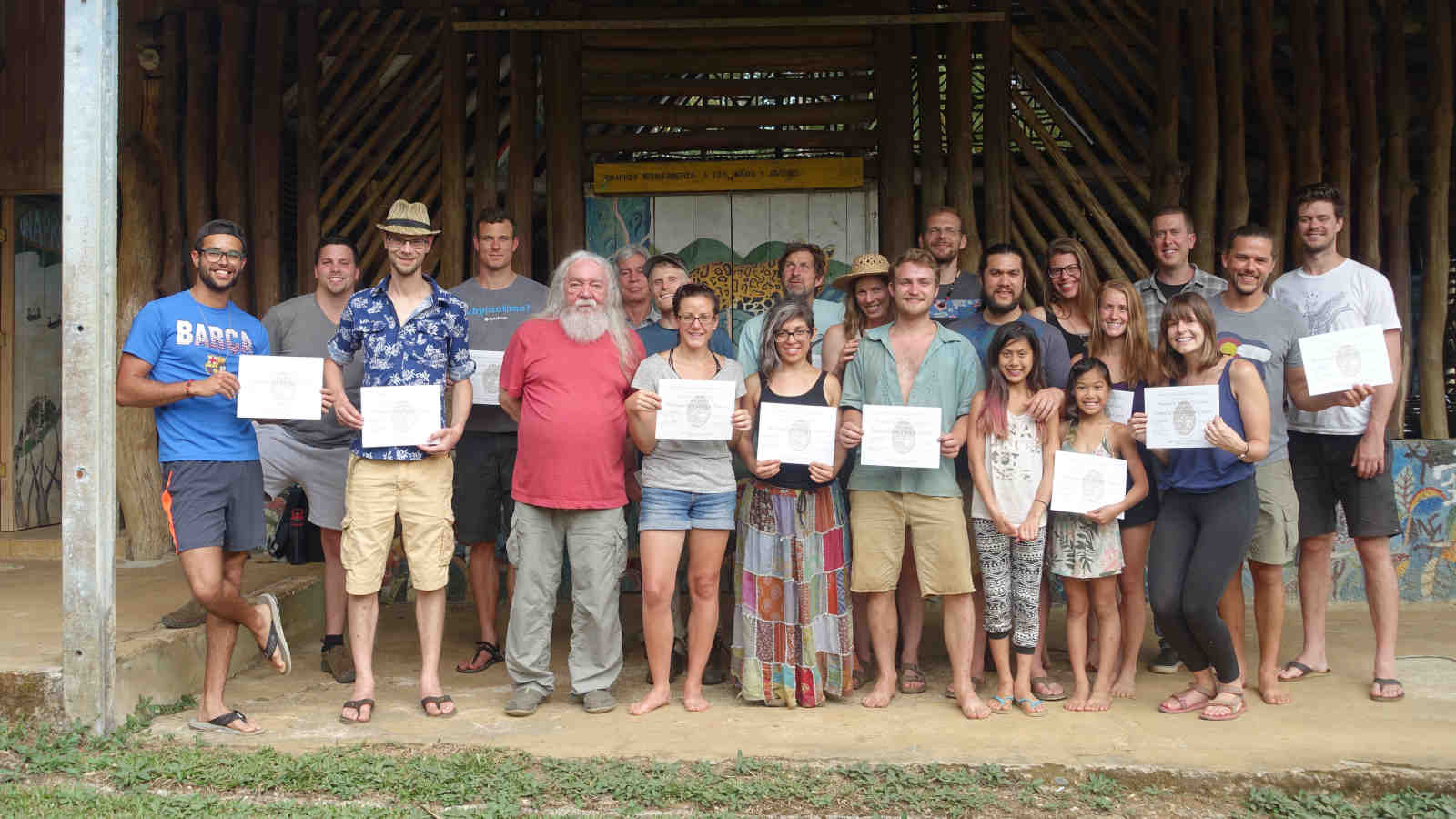
In Scott’s later years, he and Arina entrusted the future of PI to Jason Gerhardt and Natalia Vega Araya. Natalia and Jason taught the PDC under Scott’s direct mentorship for many years from innovative farms in Colorado to deeply rooted intentional communities in New Mexico to agricultural institutes in Costa Rica. Scott felt deeply that permaculture was at risk of losing its way as it grew, and grew to trust Jason and Natalia as excellent teachers of permaculture and careful stewards of his legacy, but also to trust their grounding in spiritual practice, which was something Scott wished for himself. Scott passed away in July 2022.


Natalia and Jason spent years talking about how to honor the trust Scott put in them, all the while teaching PDC’s and mentoring students through the Diploma of Permaculture Design that Jason and Delvin Solkinson crafted the requirements for. After a while, teaching PDC’s felt less invigorating, and various curriculum upgrades didn’t feel appropriate either—it became clear that the permaculture moniker was more confining than potentiating for Natalia and Jason. With Co-Directors ready to move on, this reality led us to where we are.
Intersecting with an all time low in diploma program enrollment and waning interest for in-person courses, and not wanting to follow the trends of online education for what is a deeply hands-on field (Scott was vehement that permaculture education’s impact on students and the world would be watered down when learned online), it’s plain to see that we are at a clear crossroads at this 30 year mark.
We share all of this publicly because PI represents a legacy, a direct lineage, and perhaps you are apart of it. People have given their lives, relationships, and spirits to this institute with the scars to prove it. The nucleus of graduates in the world spreading seeds and signing off on new PDC graduates comprises the actual body of work accomplished through all of our collective effort. The effects of PI’s existence are beyond any of us. In our discussions as a board we’re inclined to leave it that way, with a lineage that will carry on for posterity. 30 years is enough to have started a snowball.
We have therefore decided to stop operating programs under the PI banner and taken those pages down from the website so we can focus on growing ecological culture within our own home communities, and to complete the research that some of us are engaged in regarding professional permaculture pathways, which we deem essential to how permaculture education moves forward into the future.
Permaculture continuing to grow depends on those who practice it being able to derive sustenance from it. We intend to leave one more legacy behind by sharing our findings about the patterns that have proven successful, as well as the barriers, for practitioners moving from learning permaculture to making it a core part of their livelihood. We’ve been interviewing practitioners around the world, researching diploma programs, and released the Global Professional Permaculture Pathways Survey through Utah State University. The results of this work will be freely available to help PDC graduates navigate viably applying permaculture professionally. The results can also be used by the many other permaculture institutes around the world to improve existing educational pathways. Our hope is that those who wish to work in permaculture can continue to find meaning in it while simultaneously sustaining themselves economically.
In closing, as Larry Santoyo remarked to Jason regarding PI’s future, “It’s okay for something to have a lifespan,” a statement both obvious and profound because we had previously clung to the idea that PI should continue at all costs. We have full trust that the “composting” of this form of PI will give rise to new creative forms for those of us who are and will continue working towards the growth of ecological culture on the planet.
Jason Gerhardt (Co-Director – USA), Natalia Vega Araya (Co-Director – Costa Rica)